Life Coaching Website Examples: 7 Layouts That Turn Visitors Into Clients (2026)
Seven life coaching website layouts, from the single-offer sales page to the speaker site, with the sections each needs and the templates that match.





Coaching is a crowded field. The International Coaching Federation's 2025 Global Coaching Study counted a record 122,974 coach practitioners worldwide, up 15% since 2023 (ICF). When a potential client is comparing you with other coaches, your website is often the deciding factor.
The best coaching websites aren't the flashiest. They're the clearest about who they help, what changes for the client and what to do next. Below are seven layouts that work, with the sections each one needs.
Key takeaways
Pick one layout based on how you sell: discovery calls, a single programme, a course, or speaking.
Every coaching site needs the same core: a specific promise, your story, real proof and one clear call to action.
Name the client and the change ("for new managers who want to lead with confidence") instead of a vague promise.
Only use genuine testimonials, with permission.
7 life coaching website layouts
1. The discovery-call site
Best for: one-to-one coaches who sell through a free first conversation.
Sections: a headline naming who you help, three problems you solve, how coaching with you works, your story, testimonials, and a booking button that appears several times.
2. The single-programme sales page
Best for: coaches running one signature programme or cohort.
Sections: the promise, who it's for (and who it isn't for), the programme week by week, what's included, the price, an FAQ and an enrol button. One long page, one goal.
3. The course creator site
Best for: coaches who sell online courses alongside or instead of one-to-one work.
Sections: course curriculum, the instructor, student results, pricing options and a guarantee if you offer one.
4. The speaker and trainer site
Best for: coaches who run workshops, keynotes or corporate training.
Sections: talk topics, a short showreel or photos from events, organisations you've worked with, and a booking enquiry form.
5. The personal brand site
Best for: coaches whose personality and point of view are the product.
Sections: a strong portrait, your philosophy in your own words, content (podcast, newsletter, articles), and offers at different price points.
6. The niche specialist site
Best for: coaches with a narrow focus, such as career changers, founders or new parents returning to work.
Sections: language that mirrors your niche, case studies from that niche, and resources that only that audience would need.
7. The content-led site
Best for: coaches who win clients through search and a newsletter.
Sections: a blog or resources hub, a free download or newsletter sign-up, and services linked from every article.
What every coaching website needs
A specific headline. Who you help and the change they get.
Your story. Why you coach and what qualifies you, including credentials if you have them.
How it works. Session length, format, duration and what happens in the first call.
Real proof. Testimonials with full names and permission, and results stated honestly.
One call to action. Book a call, join the programme or enrol. Repeat it, don't add more.
A photo of you. Coaching is personal, so show the person.
Templates that match these layouts
Zeen ($49): for the programme and course layouts
Zeen is a personal branding course template for coaches, consultants, creators and experts who sell online courses and programmes. Its conversion-focused sections are built to show your expertise, build credibility and turn visitors into paying students.
Pages: Home, 404 (one long sales page)
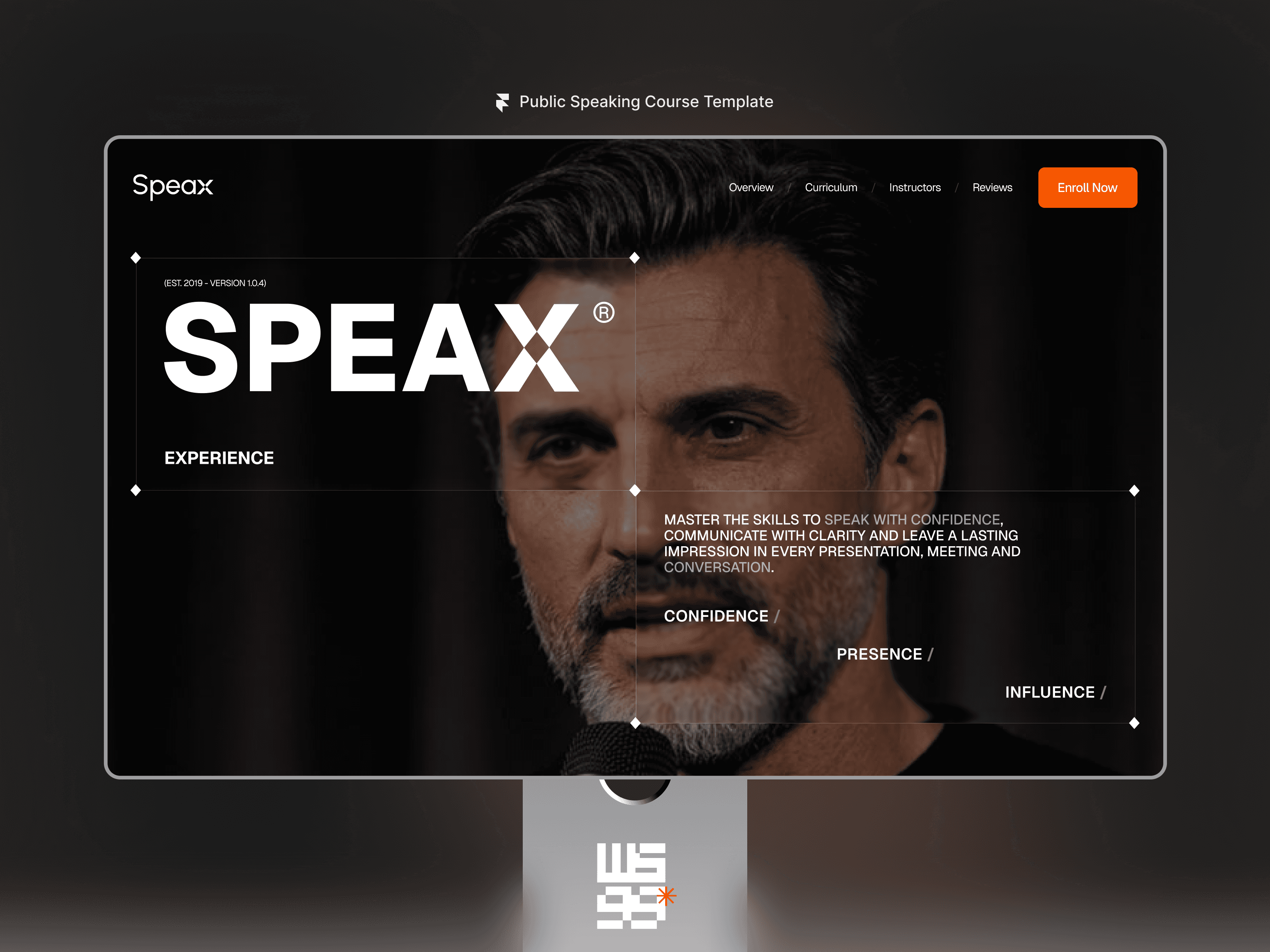
Speax ($49): for the speaker and trainer layout
Speax is built for coaches and experts selling public speaking and communication programmes, including leadership coaches and trainers.
Pages: Home, 404 (one long sales page)
Elvora (free): for the content-led layout
If you want a blog from day one, Elvora is a free multi-page template with Blog and Projects CMS collections you can adapt into articles and client stories.
For a side-by-side comparison, read the best Framer templates for coaches.
How to choose your layout
Selling one-to-one sessions: the discovery-call site.
Selling one programme or cohort: the sales page (Zeen).
Selling talks or training: the speaker site (Speax).
Growing through content: the content-led site (Elvora).
FAQ
What makes a good life coaching website?
A clear promise to a specific person, a story that builds trust, honest proof and one obvious next step.
Should a coaching website show prices?
For programmes and courses, yes. For high-touch one-to-one coaching, many coaches share a starting price or explain pricing on the discovery call.
How many pages does a coaching website need?
A single long page is enough to sell one programme. Add About, Services and a Blog as your offers and content grow.
Do I need testimonials before launching?
No. Launch with your story and process, then add genuine testimonials as clients give them. Never use invented ones.
Can I build a coaching website without code?
Yes. Zeen, Speax and Elvora are built entirely in Framer and edited visually.

More Blogs
Ideas and inspiration for creators
Our blog covers everything from website strategy to design best practices, keeping you ahead.